
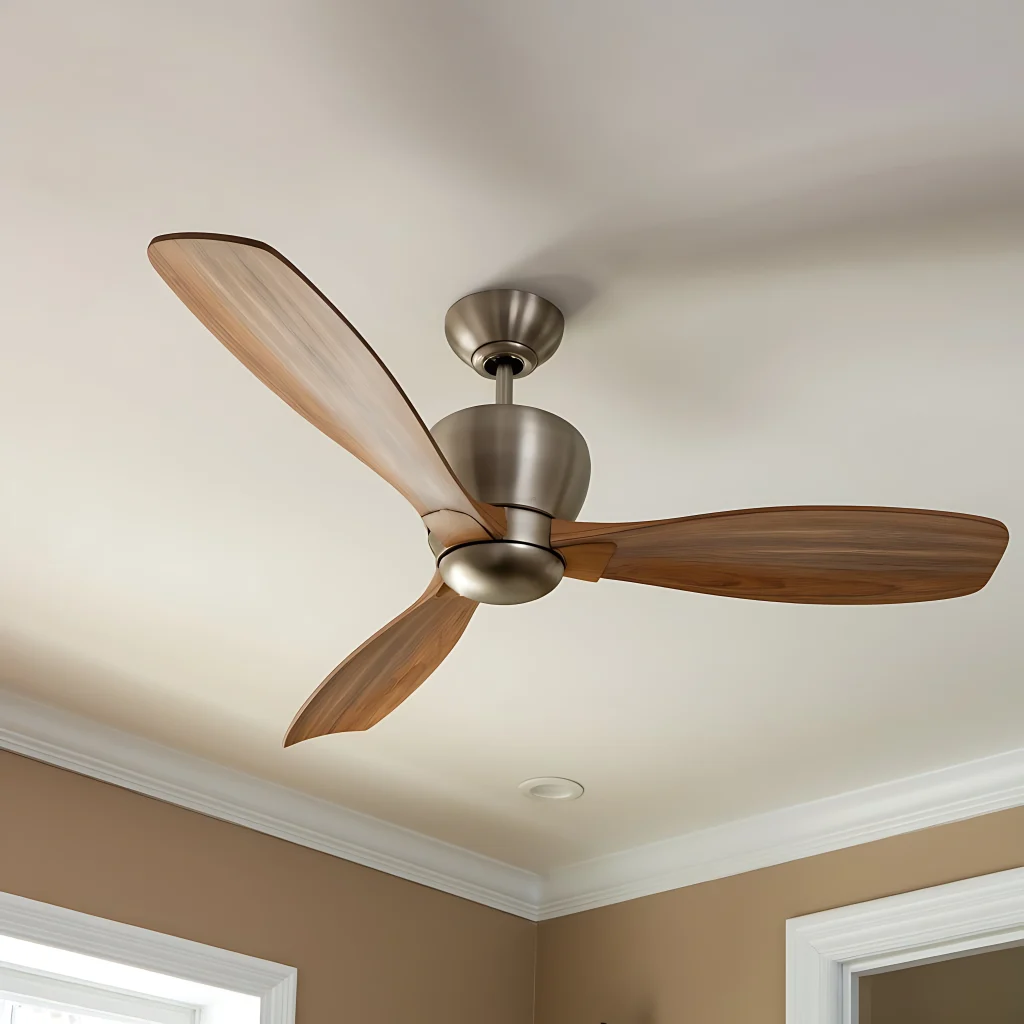

Ceiling fan installation in Melbourne costs between $150 and $500+, depending on whether you are replacing an existing fan or installing a brand new one where no wiring currently exists. It is one of the most cost-effective electrical upgrades a homeowner can make – and Melbourne homeowners are catching on fast.
Unlike most cities, Melbourne’s unpredictable climate means ceiling fans are in use year-round. In summer, they push cool air down, making a room feel up to 3-4 degrees cooler. In winter, reversing the fan direction circulates warm air that collects near the ceiling, reducing heating costs. That makes ceiling fans one of the smartest investments in any Melbourne home.
At Statewide Sparkies, we supply and install ceiling fans across Melbourne’s north-east – from Greensborough and Eltham through to Heidelberg, Ivanhoe, Doncaster and Northcote.
This guide explains exactly what you will pay, what affects the price, and how to avoid the common mistakes that cost homeowners extra.
Ceiling Fan Installation Cost Summary (2026)
The table below covers typical ceiling fan installation costs in Melbourne, including GST, for labour only. Fan supply is additional unless you request a supply-and-install package.
| Service | Typical Cost (inc. GST) |
|---|---|
| Replace existing fan (like-for-like swap) | $150 – $250 |
| Install new fan (existing ceiling point) | $200 – $350 |
| Install new fan (no existing wiring) | $350 – $550+ |
| Install fan with light kit | $200 – $400 |
| Install outdoor/patio ceiling fan | $250 – $450 |
| Additional switch or wall controller | $100 – $200 |
| Remote control kit installation | $50 – $100 |
| Install ceiling fan on sloped/raked ceiling | $300 – $500 |
| Fan removal and disposal | $80 – $150 |
These prices are for labour and installation only. The fan unit is a separate cost, typically $150 to $800, depending on brand, size, and style. Statewide Sparkies can supply fans as part of the job, or we can install a fan you have already purchased. Always check with your installer before buying to confirm the fan is compatible with your ceiling type and existing wiring.
What Affects Ceiling Fan Installation Costs?
No two ceiling fan installations are identical. Here is a breakdown of the key factors that affect installation costs for your home.
Replacement vs New Installation
Replacing an existing fan when wiring and a ceiling mount already exist is the cheapest option; most straightforward swaps take 30 to 60 minutes. A new installation where no fan previously existed is more complex. The electrician needs to run cable from a switch to the ceiling point, install a mounting bracket and possibly add a new circuit. If there is only a light fixture with no fan bracket, a fan-rated bracket must be installed to accommodate the additional weight and vibration generated by ceiling fans.
Ceiling Height and Type
- Standard 2.4m – 2.7m ceiling: straightforward access, standard pricing
- High ceilings (3m+): may require scaffolding or a taller ladder, which adds time and cost
- Raked or sloped ceilings: need an angled mounting kit (adds $30 – $80 in parts) and more installation time
- Concrete ceiling: common in apartments and townhouses, requires special anchoring and adds to labour time
Wiring and Switching
Ceiling fan wiring choices significantly affect the final price. The options from simplest to most complex are:
- Single switch (fan and light on one switch) – simplest and cheapest
- Separate switches for fan and light – requires additional wiring, adds cost
- Wall controller with speed control and light dimming – typically $100 – $200 additional
- Remote control – some fans include a remote; adding an aftermarket remote costs $50 – $100
Modern ceiling fans also include smart options that connect to home automation systems; these can add $50-$200 to installation costs, depending on the controller type.
Indoor vs Outdoor Ceiling Fans
Outdoor ceiling fans for patios, verandahs, and alfresco areas must be IP-rated for outdoor use. Outdoor-rated fans cost more to purchase, and the electrical work involved may require weather-resistant wiring and additional RCD protection. If you are comparing indoor and outdoor fan installations, expect the outdoor option to sit at the higher end of the price range.
Structural Support
Ceiling fans are heavy – most weigh between 5 and 15 kg – and they vibrate continuously during operation. They cannot be safely mounted on a standard light fitting bracket. A fan-rated brace or bracket must be secured to ceiling joists. If joists are not accessible or are in the wrong position, a support brace spanning between joists is needed. This adds parts and labour to the job, but skipping it is not an option – an unsecured fan is a serious safety risk.
Can You Install a Ceiling Fan Yourself?
No. Ceiling fan installation requires electrical wiring and must be performed by a licensed electrician in Victoria. This is not a grey area.
Even fans marketed as “DIY-friendly” at hardware stores still require a qualified electrician for wiring and connections. Attempting to install your ceiling fan yourself is illegal under Victorian law, voids your home insurance, and creates a genuine risk of electrocution or electrical fire.
A Certificate of Electrical Safety (COES) is required for ceiling fan installation in Victoria. This certificate confirms the work was completed correctly and is a legal requirement – not an optional extra. Installation must be performed by a licensed electrician, who can issue this certificate upon completion. If you believe your fan is faulty or notice anything unusual after installation, contact your electrician immediately rather than attempting to investigate the wiring yourself.
Supply and Install – Do We Provide the Fan?
Yes. Statewide Sparkies offers a professional installation service, including the supply and installation of ceiling fans. We work with trusted brands including Clipsal, Hager, SAL and NHP, and can recommend the right fan for your room size, ceiling height and preferences.
If you have already purchased a fan, we are happy to install it. Please confirm with your installer before purchasing; the fan must suit your ceiling type and existing wiring to avoid additional costs on the day.
Choosing the right fan size also matters. A fan that is too small struggles to move air effectively; one that is too large can look out of place and generate excessive airflow. As a rough guide:
| Room Size | Recommended Fan Diameter |
|---|---|
| Up to 12 sqm | 900 – 1050mm |
| 12 – 20 sqm | 1200 – 1320mm |
| 20+ sqm | 1400mm+ (or two fans) |
For rooms with limited ceiling space, low-profile hugger fans mount flush to the ceiling and are a practical option. DC ceiling fans are also worth considering – they use up to 70% less electricity than traditional AC models and run more quietly.
Ceiling Fans vs. Air Conditioning: Do You Need Both?
Ceiling fans don’t lower the actual air temperature – they create airflow that makes you feel cooler. Air conditioning actually reduces the temperature. They serve different purposes, and many Melbourne homeowners use both.
The running cost difference is significant. A ceiling fan uses approximately 50-75W at high speed, comparable to a light bulb. Running a fan for 8 hours costs approximately $0.10 – $0.20. A split-system air conditioner, by contrast, costs roughly $0.30-$0.60 per hour to operate. Using ceiling fans on mild days and reserving air conditioning for extreme heat can meaningfully reduce energy bills across Melbourne’s summer.
In winter, reversing the fan direction pushes warm air down from the ceiling, reducing heating costs without turning up the thermostat. Modern ceiling fans offer this reverse function as standard – a simple switch on the motor housing or remote control.
Statewide Sparkies also installs split-system air conditioning. If you are considering both, we can assess your home and recommend the most cost-effective combination for your needs.
Common Questions About Ceiling Fan Installation in Melbourne
How much does it cost to install a ceiling fan in Melbourne?
Expect to pay $150 – $250 for a straightforward replacement of an old fan, and $350 – $550+ for a new install requiring new wiring. The total cost to install a ceiling fan depends on the ceiling type, switching options, and whether the fan is supplied as part of the job.
Can I replace a light fixture with a ceiling fan?
Usually, yes, but the existing light mounting point may not be strong enough. A fan-rated bracket must be installed, and the wiring may require upgrading. This is standard electrical work for a licensed electrician and typically adds $50-$150 to the cost.
How long does ceiling fan installation take?
A straightforward replacement of an existing fan takes 30 – 60 minutes. A new installation with new wiring takes 1.5-3 hours. Installing a fan on a raked ceiling or in a concrete ceiling can take longer.
Do ceiling fans use a lot of electricity?
No. A ceiling fan uses about 50-75W at high speed, comparable to a light bulb. Running a fan for 8 hours costs roughly $0.10-$0.20, making ceiling fans among the most energy-efficient ways to improve comfort in your home.
Can I get an installation quote before booking?
Yes. We provide free quotes and estimates. In most cases, we can provide a clear price range over the phone. Call 0435 877 448 to discuss your job. We avoid providing a firm installation price over the phone without first seeing the ceiling access and existing wiring, but we will always give you an honest range before any work begins.
Need a Ceiling Fan Installed? Book Statewide Sparkies Today
Need a ceiling fan installed? Call Statewide Sparkies on 0435 877 448 for a free quote. We supply and install. Same-day installation is available if you call before midday. Serving Greensborough, Eltham, Templestowe, Heidelberg, Ivanhoe, Doncaster, Thornbury, Northcote and all of Melbourne’s north-east.
Lifetime workmanship guarantee. 5.0-star Google rating. Licensed and insured. REC 25170.
Related Posts:
How Much Does Downlight Installation Cost in Melbourne? (2026 Price Guide)