
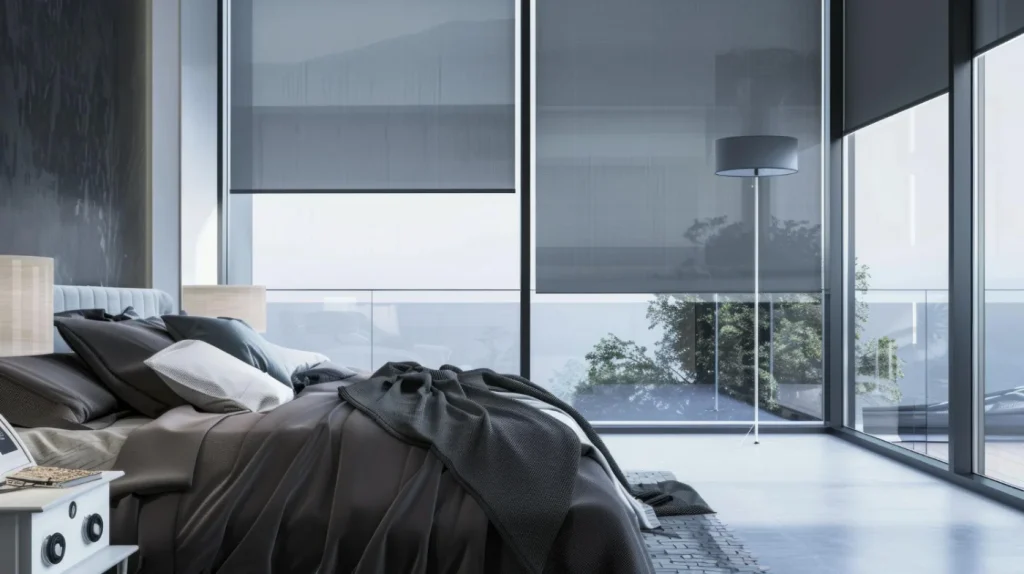

Melbourne summers can be brutal. When heatwaves hit, and the mercury pushes past 40°C, your air conditioner works overtime, and your electricity bills skyrocket. But what if you could keep your home cooler and slash those energy costs without lifting a finger?
The answer lies in smart home automation. By combining automated blinds with climate control systems, you can create an energy-efficient home that responds to Melbourne’s extreme weather conditions automatically. Let’s explore how modern smart home technology can transform your summer comfort whilst saving you serious money.
The Problem: Melbourne Heatwaves and Rising Energy Costs
Melbourne homeowners face a perfect storm of challenges every summer:
- Extreme Temperature Swings
Melbourne’s weather is notoriously unpredictable. One day might bring mild 25°C temperatures, whilst the next delivers a scorching 42°C heatwave. These dramatic swings make it difficult to manually manage your home’s climate efficiently. - Rising Electricity Bills
Energy costs continue to climb across Victoria. Running your air conditioner constantly during summer can add hundreds of dollars to your quarterly bills. Many families find themselves choosing between comfort and affordability. - The Solar Gain Problem
Large windows and glass doors that provide beautiful natural light in winter become liabilities in summer. Direct sunlight streaming through windows can increase indoor temperatures by 5-10°C, forcing your air conditioner to work harder and consume more energy. - Manual Control Is Inefficient
Even with motorised blinds and a programmable thermostat, manually adjusting settings throughout the day is inconvenient and inefficient. You can’t respond to changing conditions when you’re at work, and you often forget to close blinds before the afternoon sun hits.
The result? Your home becomes uncomfortably hot, your air conditioner runs constantly, and your energy bills reflect the waste.
Smart Climate Control: Cool Before You Arrive Home
Modern smart thermostats have revolutionised home climate management. Unlike traditional thermostats that simply maintain a set temperature, smart systems learn your habits and optimise cooling based on real-time conditions.
How Smart Thermostats Work
A smart thermostat installation connects to your home’s wifi network and uses various sensors to monitor temperature, humidity, and occupancy. Through machine learning algorithms, these devices understand your schedule and preferences.
Here’s what makes them game-changers for Melbourne summers:
- Geofencing Technology: The system knows when you’re heading home from work and begins cooling 30-60 minutes before you arrive, ensuring comfort whilst minimising unnecessary runtime
- Weather Integration: Smart thermostats access real-time weather forecasts and adjust cooling strategies before heatwaves hit
- Zone Control: If you have a ducted system, smart control can cool only occupied rooms, reducing energy waste
- Energy Reports: Detailed insights show exactly how much energy you’re using and where you can save more
The Financial Impact
According to energy efficiency research, smart thermostats can reduce cooling costs by 10-23% annually. For a Melbourne household spending $800 per year on summer cooling, that’s potential savings of $80-$184 every year.
The payback period for smart thermostat installation typically ranges from 1 to 3 years, making it one of the most cost-effective energy-efficient smart home systems you can implement.
Automated Blinds: Passive Cooling That Works While You’re Away
Whilst smart thermostats actively manage temperature, automated blinds provide passive cooling by controlling solar heat gain before it becomes a problem. This is where the real magic of home automation shines.
The Science of Solar Heat Gain
When direct sunlight hits your windows, the greenhouse effect can significantly raise indoor temperatures. Studies show that up to 76% of the heat entering your home in summer comes through windows. By blocking sunlight before it enters, you reduce the cooling load on your air conditioner.
Motorisation Made Simple with Shelly Devices
You don’t need to replace your existing motorised roller blinds to achieve smart control. Shelly devices offer an affordable retrofit option that adds intelligent automation to blinds you already own.
Here’s how it works:
- Install Shelly Controllers: Small Wi-Fi-enabled switches connect to your existing blind motors (compatible with most motorised blind systems)
- Connect to Wifi: Once installed, the Shelly device joins your home network
- Configure Automation: Set rules based on time, temperature, or sun position
- Control Via Smartphone: Operate multiple blinds individually or together using your smartphone
Smart Automation Scenarios
The real power comes from intelligent automation rules:
| Time of Day | Automation Action | Energy Benefit |
|---|---|---|
| 10:00 AM | North-facing electric blinds close as the morning sun intensifies | Reduces solar gain by up to 77% |
| 2:00 PM | West-facing roller blind automatically lowers before the afternoon sun hits | Prevents 3-5°C temperature increase |
| 6:00 PM | All smart blinds open as the sun sets, allowing natural cooling | Reduces evening AC load by 30% |
| Night | Blockout curtain closes for privacy, opens at sunrise | Maintains comfort whilst maximising natural light |
Beyond Basic Remote Control
Traditional motorised blind systems use a remote control for manual operation. Smart blinds automation takes this further by eliminating the need for human intervention. Whether you’re at work, on holiday, or simply busy with other tasks, your blinds respond intelligently to conditions.
The versatility of modern smart home technology means your automated blinds can:
- Track the Sun: Use solar position data to close blinds before direct sun hits windows
- Respond to Temperature: Close automatically when the indoor temperature reaches a preset threshold
- Integrate with Weather Data: Adjust shading strategy based on forecast conditions
- Work with Voice Command: Control via Alexa or Google Assistant for convenient manual overrides
Solar Integration: Using Excess Energy Intelligently
For Melbourne homeowners with solar panels, smart home automation creates an opportunity to maximise self-consumption of solar energy.
The Solar Challenge
Most solar systems generate peak power between 10 AM and 2 PM, precisely when many households are empty, and consumption is low. Without battery storage, excess solar energy feeds back to the grid at low rates (6-8 cents per kWh), whilst evening electricity imports can cost 25-40 cents per kWh.
Smart Solar + AC Integration
Smart home energy savings multiply when you coordinate solar production with cooling loads:
- Pre-Cool During Solar Peak: Run air conditioner harder during peak solar hours (using free solar power) to thoroughly cool thermal mass
- Maintain Temperature: Reduce AC usage during evening peak rates, relying on thermal storage from earlier cooling
- Blind Coordination: Keep automated blinds closed during solar peak cooling to trap cold air inside
This strategy can shift 60-70% of your cooling energy consumption to solar hours, dramatically reducing grid imports during expensive peak periods.
Smart Home Automation Systems
Platforms like Home Assistant, Alexa, Google Home, or Apple HomeKit can orchestrate these complex interactions. An electrician familiar with smart home technology can help configure your energy-efficient smart home systems to work seamlessly with your solar installation.
The “Smart” Difference: Why Apps Beat Manual Remotes
If you already have motorised roller blinds with a single remote, you might wonder whether upgrading to smart blinds is worth the investment. Here’s why home-automation makes a substantial difference:
Convenience and Comfort
- Operate from Anywhere: Control of your blinds via smartphone means you can adjust settings while travelling or at work
- Multiple Motors, One Interface: Instead of juggling several remotes for multiple blinds throughout your home, control everything from a single app
- Automated Schedules: Set it once, forget it forever. No more remembering to close blinds every afternoon
Enhanced Child Safety
Modern motorised blind systems eliminate cord hazards entirely. Battery-powered motor options offer wire-free installation that’s particularly suitable for children’s rooms, whilst hardwired systems integrate cleanly with your home’s electrical infrastructure.
Energy Efficiency Gains
The difference between “I’ll close the blinds later” and automatic closure at optimal times adds up. Research shows that automated window coverings improve energy efficiency by 30-40% compared to manual operation, simply because automation ensures blinds close at the right moment every single time.
Light Control and Privacy
Smart blinds provide sophisticated privacy and light control:
- Gradual Adjustment: Open and close gradually for gentle light transitions
- Partial Positioning: Set light filtering positions for different times of day
- Room Darkening: Blackout options for bedrooms ensure quality sleep even during long summer evenings
Future-Proof Flexibility
As your needs change, smart home automation systems adapt. Add new devices, create different automation rules, or integrate with emerging technologies. Custom-made automation solutions from experienced installers ensure your system grows with your requirements.
Getting Started: Your Path to Smart Home Energy Savings
Transitioning to climate control automation and automated blinds doesn’t require a complete home renovation. Here’s how to begin:
Assessment Phase
- Identify Problem Areas: Which rooms get hottest? Where do electricity bills spike the highest?
- Evaluate Existing Systems: Do you have motorised blind systems that can be retrofitted? What type of heating/cooling do you use?
- Define Priorities: Start with high-impact areas (west-facing rooms, main living spaces)
Technology Selection
Choose solutions compatible with your existing infrastructure:
- For Existing Motorised Blinds: Shelly switches, or similar wifi controllers, offer cost-effective retrofits
- For New Installations: Consider Somfy RTS systems, Telis remotes, or Sonesse 30 WireFree motors with built-in smart capabilities
- Smart Thermostats: Options range from budget-friendly to premium systems with advanced learning features
Professional Installation Benefits
Whilst some smart home technology supports easy installation, working with a qualified electrician ensures:
- Safety Compliance: Hardwired systems require proper electrical connections
- Optimal Configuration: Experienced installers understand how to integrate multiple motors and controllers efficiently
- Warranty Protection: Professional installation typically extends manufacturer warranties
- Troubleshooting Support: Access to ongoing technical assistance
Budget Considerations
| Investment Level | What You Get | Estimated Cost* |
|---|---|---|
| Starter System | Smart thermostat + 2-3 retrofit blind controllers | $800-$1,200 |
| Mid-Range Setup | Smart climate control + 5-6 motorised blinds with automation | $2,500-$4,500 |
| Complete System | Whole-home integration with solar coordination | $6,000-$12,000 |
*Estimates vary based on existing infrastructure, home size, and component selection
The designer range of smart blinds and window furnishings continues expanding, with options suitable for every budget and aesthetic preference. From Venetian styles to roller blind tube systems, there’s an energy-efficient option for every window.
Ready to Save Money This Summer?
Melbourne’s extreme summers demand smarter home management. By combining automated blinds with intelligent climate control, you create a responsive system that:
- Reduces cooling costs by 25-40%
- Eliminates the inconvenience of manual adjustments
- Improves comfort throughout your home
- Protects furnishings from UV damage
- Increases property value with modern smart home features
The transition to energy-efficient smart home systems pays dividends immediately through lower electricity bills, with benefits compounding over the years.
Contact Statewide Sparkies for Smart Home Installation Near Me
As fully licensed electricians serving Melbourne’s north and surrounding suburbs, Statewide Sparkies specialises in smart home installation that delivers real energy savings. Our team has extensive experience with:
- Smart thermostat installation and configuration
- Motorisation of existing blinds and new installations
- Integration with solar systems for maximum self-consumption
- Whole-home automation using platforms like Google Home, Alexa, and Apple HomeKit
- Custom solutions tailored to your home’s unique requirements
We’re available 24/7 for consultations and emergency service. With our lifetime warranty on workmanship and commitment to using premium brands (Clipsal, Hager, Schneider), you can trust that your smart home automation will perform reliably for years to come.
Don’t wait for the next heatwave to take action. Contact Statewide Sparkies today at 0435 877 448 or email jay@statewidesparkies.com.au for a free quote on smart home energy-saving installations. Let us help you effortlessly adjust your home’s climate whilst watching your energy bills drop.